Tucked into the rolling foothills, where Aspen groves shimmer in the wind and the Elbow River bends away from the Rockies, stood a small log building that quietly changed the course of Canadian travel. The Bragg Creek Youth Hostel, recognized as Canada’s first youth hostel, opened its doors in 1933 and introduced a new, exciting way to explore the outdoors; simply, affordably, and in community.
Inspired by the hostel movement in Europe, Mary and Catherine Barclay, sisters from Calgary, persuaded Ida May White (who operated the Wake Siah Lodge) to allow them to erect a tent on the White property. Popularity increased and two years later the sisters needed a permanent structure. They received permission to build a modest cabin on Tom Fullerton’s Last Break Ranch just north of Bragg Creek. At a time when money was scarce but wanderlust was not, the hostel offered young travellers a bed for a few cents a night, on the condition that they help with chores. The formula was built on the idea of community with shared bunks, shared meals, and shared responsibility.
From the beginning, the Bragg Creek Hostel was more than just a roof over one’s head. It was a gathering place for hikers, cyclists, skiers, and dreamers eager to explore the nearby Rockies prior to highways and high-end lodges that are now commonplace with mountain travel.
Like many early hostels, Bragg Creek’s survival depended on volunteers. Guests were expected to chop wood, haul water, cook communal meals, and leave the place better than they found it. This ethos fostered friendships and a spirit of stewardship that mirrors the values celebrated by Bragg Creek Trails today. The hostel remained in operation until 1947.
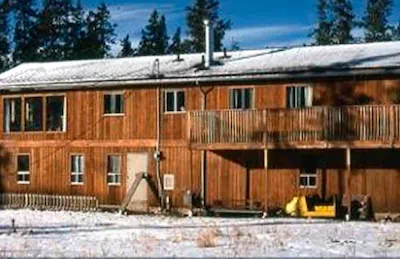
In 1977 the Canadian Youth Hostel Association opened a second hostel in the Bragg Creek area. This one was located in an Alberta Forest Reserve clearing west of the hamlet in what is known today as the West Bragg Creek area of Kananaskis Country. Unfortunately, the popular hostel burned down in 1984 and all that remains is the outline of the concrete basement at the western edge of Hostel Meadow. After the fire the original Hostel Road was abandoned and the bridge that spanned Bragg Creek was washed away in a flood.
To visit the historic hostel site today simply follow the Watershed Heritage Interpretive Trail from the east end of the West Bragg Creek parking lot. From there, continue down the Old Hostel Road to a giant beaver dam, which was the site of that original bridge. Explore the 3.3 km Hostel Loop or return to the parking lot via the Hostel Meadow Trail. An interpretive sign can be found near the hostel’s old foundation.
In 2018, Parks Canada and the Historic Sites and Monuments Board of Canada officially unveiled a plaque on White Avenue in Bragg Creek that commemorates the historic significance of the Canadian Youth Hostels Association. It reads,
“On May 13, 1933, Mary and Catherine Barclay and a few of their friends pitched a large canvas tent on Ida May White’s property in Bragg Creek. They began to charge young hikers a modest fee for a safe place to stay and soon started a permanent home for the hostel on Thomas Fullerton’s nearby property. Inspired by the youth hostelling movement in Europe, the energetic Barclay sisters founded the Canadian Youth Hostels Association. By the early 1940s, its success had led to the creation of a network of affordable accommodations in Canada, offering opportunities for independent, adventurous travel.”
Today, as trail users lace up for a ride through West Bragg or head out for a snowy ski under crisp winter skies, it’s worth remembering that nearly a century ago, a humble log hostel opened its doors and invited a generation to discover the foothills. The Bragg Creek Youth Hostel stands not only as a historic first, but as a symbol of community, adventure, and the enduring belief that the outdoors belongs to everyone.